

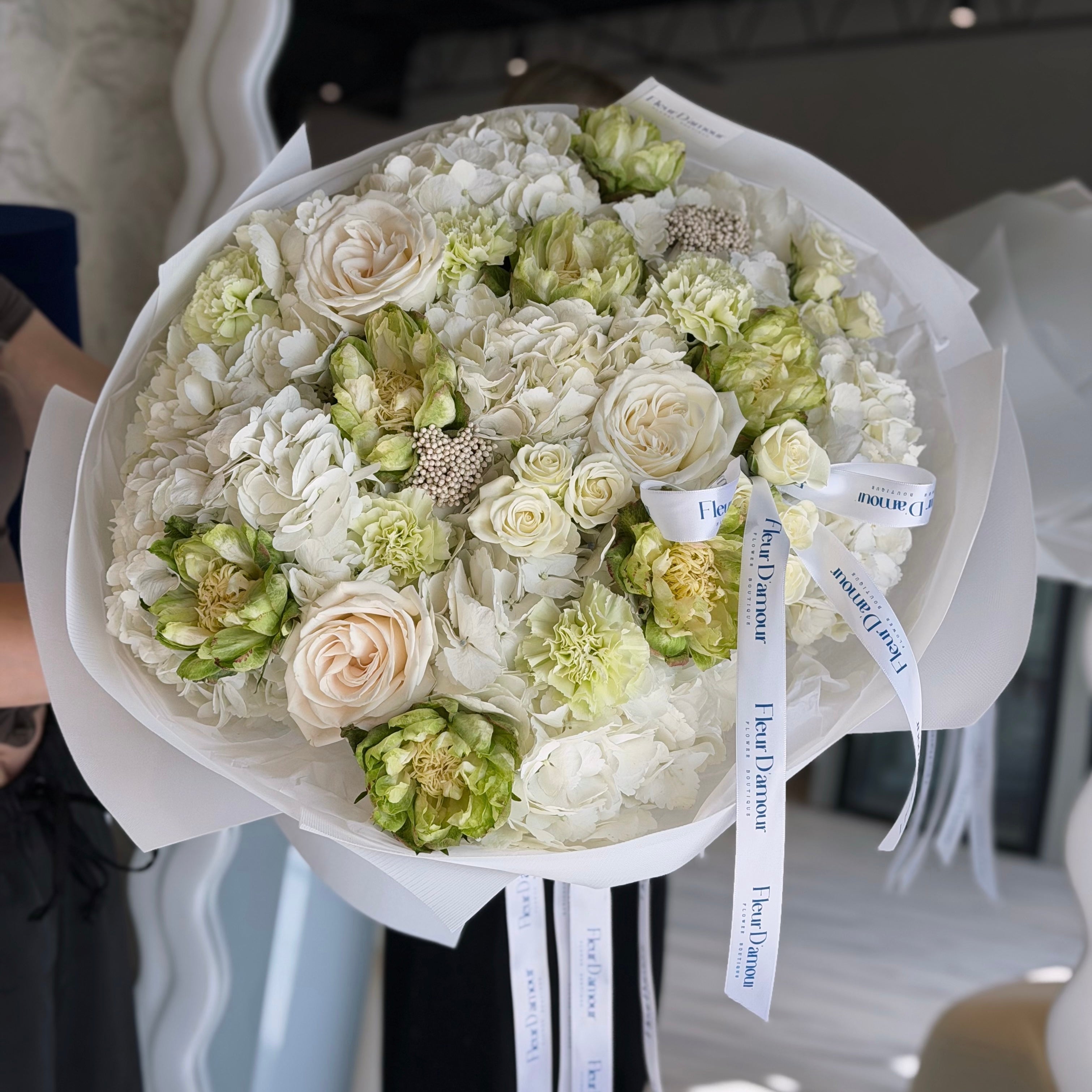
Every bouquet you receive carries a story far longer than the moment it arrives at your door. Before flowers reach a vase on your kitchen table, they travel through farms, coolers, trucks, and skilled hands — each step designed to preserve their beauty and extend their life. Understanding this journey helps you appreciate the craftsmanship behind every arrangement and gives you the knowledge to keep your blooms fresh for as long as possible.
Stage One: Cultivation at the Farm
The journey begins on flower farms, often located in regions with ideal growing climates such as Colombia, Ecuador, the Netherlands, or California. Farmers carefully select varieties for color, fragrance, stem strength, and vase life. Roses, tulips, peonies, and hydrangeas are cultivated under strict conditions — controlled temperature, humidity, and soil nutrition — to ensure each stem grows strong and healthy.

Flowers are typically harvested just before they fully bloom, when buds are tight enough to survive transport but mature enough to open beautifully once they reach the customer. Timing this harvest is one of the most delicate skills in the entire supply chain.
Stage Two: The Cold Chain
Once cut, flowers enter what the industry calls the "cold chain" — a continuous refrigerated environment that slows respiration and preserves freshness. From the farm, stems are immediately placed in cooling rooms, then packed and shipped in temperature-controlled trucks or cargo planes.
This cold chain is critical: even a few hours at room temperature can shorten a flower's vase life significantly. That's why professional florists, including boutique studios like those behind premium bouquets for delivery, rely on trusted suppliers who maintain this unbroken chain from harvest to arrival.
Stage Three: Arrival at the Wholesale Market
After crossing borders or regions, flowers arrive at wholesale markets or distribution centers, where florists and buyers select stems for their upcoming arrangements. Here, quality control is essential — inspecting petals for bruising, checking stem firmness, and grading flowers by size and freshness.
Skilled florists know how to spot the healthiest stems, which is why hand-selected collections such as mono bouquets or mix bouquets often outperform mass-produced arrangements in longevity and visual impact.
Stage Four: The Florist's Studio
This is where raw material becomes art. In the studio, flowers are re-cut, hydrated, and conditioned before design work begins. Florists remove damaged leaves, trim stems at an angle to maximize water absorption, and place blooms in fresh, nutrient-enriched water for several hours before arranging.
Design decisions — color palette, texture, shape, and balance — turn individual stems into a cohesive bouquet. Whether crafting a romantic dozen of roses or a soft, seasonal arrangement of tulips, every choice reflects both technical skill and artistic vision.
Stage Five: Packaging and Presentation
Presentation matters as much as the flowers themselves. Bouquets may be wrapped in craft paper, placed in decorative boxes, or finished with ribbons and accessories that elevate the overall gift experience. For customers seeking a more luxurious presentation, curated flower boxes and thoughtful accessories add a refined final touch.

Stage Six: Delivery to You
The final leg of the journey is the shortest but no less important. Same-day or next-day delivery ensures flowers reach recipients while still at peak freshness. Careful handling during transport — keeping stems upright, hydrated, and protected from temperature extremes — preserves everything achieved in the earlier stages.
The Flower Journey at a Glance
|
Stage |
What Happens |
Typical Duration |
|
Cultivation |
Flowers grown and harvested at peak timing |
Weeks to months |
|
Cold Chain Transport |
Refrigerated shipping from farm to market |
24–72 hours |
|
Wholesale Selection |
Quality grading and florist purchasing |
1 day |
|
Studio Conditioning & Design |
Re-cutting, hydrating, arranging |
4–12 hours |
|
Packaging |
Wrapping, boxing, finishing touches |
30–60 minutes |
|
Final Delivery |
Transport to recipient's door |
Same day to next day |
Why the Journey Matters for Vase Life
Every stage in this process directly affects how long your flowers will last. Flowers that skip proper cold chain handling or sit too long before arrangement often wilt within days. That's why sourcing from a florist who understands and controls each step — from farm to vase — makes a measurable difference.
If you're shopping for something special, browsing a full collection of flowers for delivery lets you see freshly arranged options crafted with this exact philosophy in mind — flowers selected, conditioned, and delivered with care at every stage.
Tips to Extend Your Bouquet's Life at Home
Once your flowers complete their journey, a few simple habits help maximize their beauty:
- Re-cut stemsat an angle immediately upon arrival, removing about an inch.
- Remove foliagethat would sit below the waterline to prevent bacterial growth.
- Use flower foodif provided, and change the water every two to three days.
- Keep away from direct sunlight, heat sources, and ripening fruit, which releases ethylene gas that accelerates wilting.
- Choose a cool spotin your home to slow the natural aging process.
Final Thoughts
From a farm halfway across the world to the vase on your table, flowers travel an intricate, carefully managed path. Each stage — cultivation, cold storage, selection, design, and delivery — plays a role in the beauty and longevity of your bouquet. The next time you receive flowers, take a moment to appreciate the journey behind them, and consider exploring seasonal favorites like peony bouquets for your next occasion — a fitting reminder of just how much care goes into every single stem
Share:
Home vs. Office Arrangements: Choosing Flowers for the Space They'll Live In
The Art of the Apology Bouquet: Saying Sorry with Flowers