

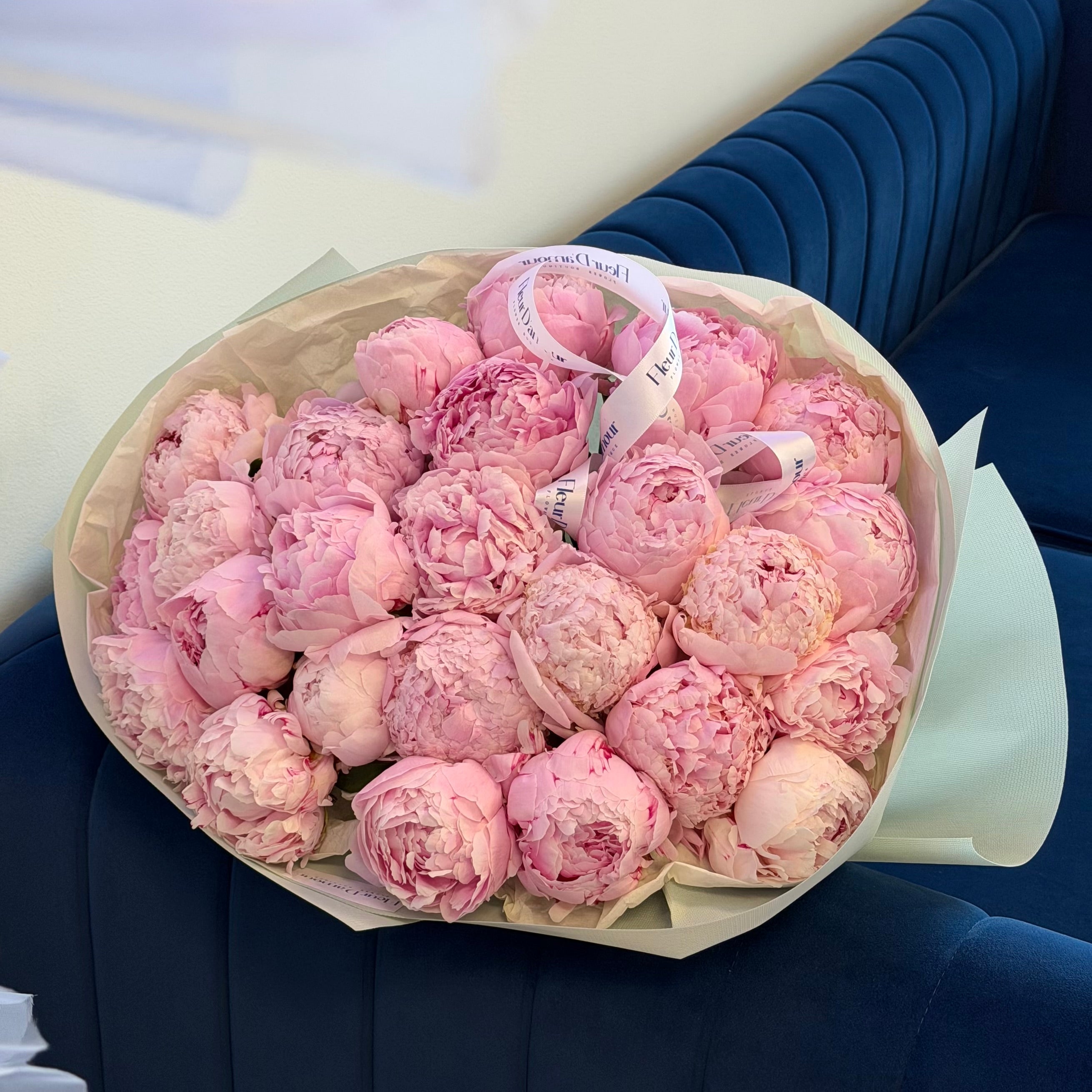
There's a reason some bouquets stop you mid-step at a flower shop window, while others — technically just as fresh — blend into the background. The difference rarely comes down to price alone. It comes down to structure, proportion, and a handful of design choices that professional florists make almost instinctively. Once you know what to look for, you'll never see a bouquet the same way again.
Below, we break down the five elements that separate a luxury arrangement from an ordinary one, and where to find each element done right.
-
Flower Quality and Stem Size
Everything starts with the raw material. Luxury bouquets almost always use premium-grade blooms: long, straight stems, tight buds with slow, even opening, and heads sized in the top percentile of what a variety can produce. A dozen standard roses and a dozen premium roses can cost nearly the same to buy wholesale, but the visual difference is enormous — bigger blooms mean fewer stems are needed to fill the same volume, which paradoxically makes a bouquet look more luxurious with less clutter.

This is why a classic Dozen of Red Roses built from premium-grade stems reads as elegant rather than ordinary, and why collections like Roses Bouquets are graded so carefully before they ever reach the design table.
-
Color Harmony, Not Color Contrast
Budget arrangements often lean on high-contrast, "rainbow" color schemes because they feel cheerful and safe. Luxury design does the opposite: it works within a tight, deliberate palette — tonal shades of the same hue, or two to three complementary colors at most. This restraint is what gives high-end bouquets their editorial, almost fashion-photography look.
Monochromatic designs are especially popular for this reason. Arrangements from the Mono Bouquets collection lean fully into a single flower type and color story, letting texture and form carry the visual interest instead of color variety.
-
Volume, Shape, and the "Dome" Silhouette
Professional florists talk about bouquet shape the way sculptors talk about form. Luxury arrangements are built around a clear, intentional silhouette — usually a rounded dome, a cascading teardrop, or a structured hand-tied spiral — rather than flowers simply gathered and tied. The outer edge is trimmed to a clean, consistent line, and height is layered so the eye moves naturally from the center outward.
Peonies are a favorite for this kind of sculptural volume because their full, ruffled heads create instant density. A bouquet built around the Peonies Bouquets collection achieves that lush, rounded silhouette almost effortlessly, which is part of why peony arrangements are so consistently requested for weddings and anniversaries.
-
Greenery and Filler — Used Sparingly
Here's a subtle giveaway of a cheaper bouquet: too much filler. Baby's breath, ferns, and generic greenery are inexpensive, so budget arrangements often use them to bulk up volume. Luxury florists flip this ratio — greenery is used architecturally, to frame and define negative space, not to pad the bouquet. Every leaf earns its place.
Mixed arrangements are the trickiest to get right here, since they combine multiple textures. Done well, though, pieces like The Flower Of Love show how disciplined greenery placement lets the focal blooms breathe instead of competing for attention.
-
The Wrap, Finish, and Presentation
The final 10% of the work accounts for a surprising amount of the perceived value. Luxury bouquets are finished with high-quality paper or fabric wraps, hidden water sources for hand-tied designs, and ribbon work that's tied — not just looped. Box arrangements take this further, presenting flowers in a rigid, gift-ready structure that protects the blooms and elevates the unboxing moment itself.
This is where accessories and box formats make a real difference. A well-chosen wrap from the Accessories selection, or a full presentation from the Boxes collection, can transform an already-good bouquet into something that feels genuinely gift-worthy the moment it's opened.

Quick Comparison: Budget vs. Luxury Bouquet
|
Element |
Budget Bouquet |
Luxury Bouquet |
|
Stem quality |
Mixed grades, shorter stems |
Premium-grade, long straight stems |
|
Color palette |
Multiple contrasting colors |
Tonal or 2–3 complementary hues |
|
Shape |
Loose, uneven gathering |
Defined dome, spiral, or cascade |
|
Greenery/filler |
Heavy, used to add bulk |
Minimal, used architecturally |
|
Finish |
Basic wrap, stapled or taped |
Tailored wrap, hand-tied ribbon, or box |
|
Overall impression |
Pretty |
Deliberate and editorial |
Putting It All Together
None of these five elements works in isolation — luxury bouquet design is really about how quality stems, restrained color, defined shape, sparing greenery, and thoughtful presentation reinforce one another. Remove any one, and the whole arrangement reads as slightly "off," even if you can't immediately say why.
If you want to see this philosophy applied across an entire range, browsing the Premium Flower Bouquets for Delivery collection is a good place to start — every design there is built on the same five principles, whether it's a tight rose dome, a soft peony cascade, or a seasonal tulip arrangement from the Tulip Bouquets collection.
The next time a bouquet catches your eye, look past the flowers themselves for a second. Check the silhouette. Check the color discipline. Check how the greenery is used. That's the anatomy of luxury — and now you know exactly what to look for.
Share:
Top 5 Birthday Bouquets That Guarantee a Bright Smile
Moody Blooms: 5 Dark and Dramatic Flower Combinations for Bold Spaces