

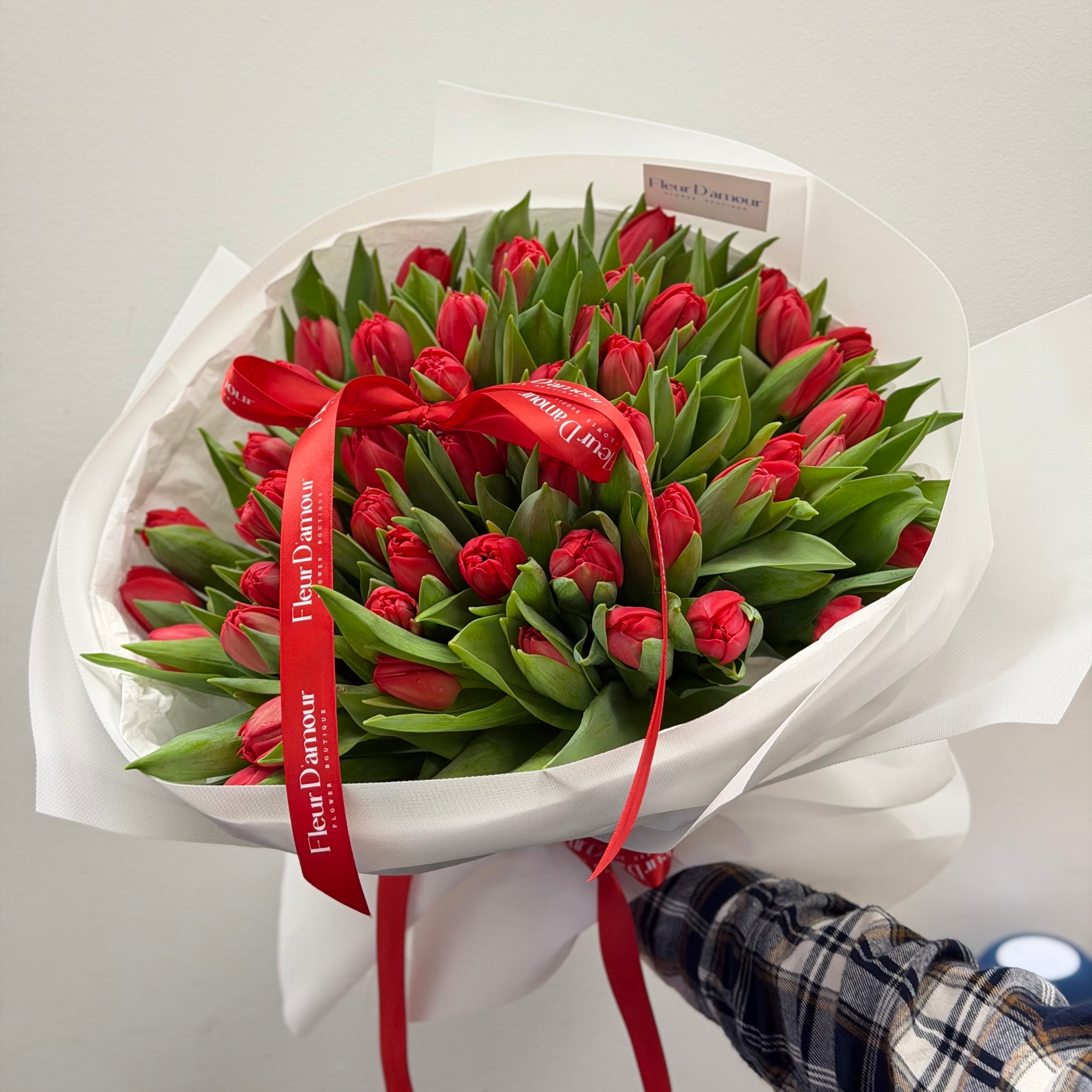
There is a quiet, unassuming elegance to tulips that few other blossoms can rival. With their smooth, structurally striking stems and perfectly symmetrical cup-shaped blooms, tulips bridge the gap between casual charm and formal sophistication. Unlike flowers that overwhelm with heavy fragrances or complicated petal structures, the tulip makes its statement through pure, saturated color and graceful, arching lines.
Whether you are celebrating a momentous milestone, offering comfort during a difficult time, or simply wishing to brighten someone’s ordinary Tuesday, a carefully chosen tulip bouquet is a universally beloved gift. This comprehensive guide explores the rich symbolism of tulips, how to tailor them for specific occasions, styling tips for breathtaking arrangements, and the secrets to keeping them fresh.
The Enduring Appeal and History of the Tulip
To truly appreciate the gift of a tulip bouquet, it helps to understand the flower's remarkable history. Originally cultivated in the Ottoman Empire (present-day Turkey), tulips were introduced to Western Europe in the late 16th century. They became so wildly popular in the Netherlands during the 17th century that they triggered "Tulip Mania"—a period where the value of tulip bulbs skyrocketed to extraordinary heights, making them more valuable than gold or real estate.

Today, while they are much more accessible, tulips have never lost their association with abundance, perfection, and refined taste. Their arrival is globally recognized as the ultimate herald of spring, representing rebirth, renewal, and the vibrant awakening of nature after a long, dormant winter.
Decoding the Colors: The Language of Tulips
During the Victorian era, the practice of floriography—the language of flowers—allowed individuals to send coded messages through specific blossoms. Tulips, in general, symbolize "perfect love." However, the message changes significantly depending on the color palette you select for your recipient.
- Red Tulips: A declaration of true, passionate love. A bouquet of deep red tulips is a powerful, romantic alternative to the traditional dozen red roses, offering a fresh, modern aesthetic for anniversaries or Valentine’s Day.
- White Tulips: Symbolizing purity, innocence, respect, and forgiveness. White tulips are an incredibly elegant choice for apologies, sympathy arrangements, or conveying a sense of serene peace.
- Yellow Tulips: Historically associated with hopeless love, their modern meaning has evolved to represent sunshine, cheerful thoughts, and joy. They are the ultimate "get well soon" or "just because" gift, guaranteed to illuminate any room.
- Pink Tulips: Conveying affection, caring, and well wishes. Pink is a highly versatile hue, making these tulips perfect for friends, family members, or celebrating a new baby.
- Purple Tulips: Tied to royalty, nobility, and elegance. A rich plum or vibrant violet tulip arrangement carries a sense of majesty and deep admiration, making it an excellent choice for a mentor, a boss, or an elegant dinner party host.

Occasions Perfectly Suited for Tulip Bouquets
The versatility of the tulip makes it appropriate for a myriad of events. Here is how to leverage their beauty for different life moments:
- Birthdays and Celebrations
For a festive occasion, lean into the tulip's incredible color diversity. A "parrot tulip" bouquet—featuring petals that are ruffled, feathered, and boldly streaked with multiple colors—adds a playful, exotic touch. Mixed bouquets combining bright yellows, oranges, and hot pinks capture the energy of a celebration perfectly.
- Mother’s Day and Spring Holidays
Since tulips are the quintessential spring flower, they are a natural fit for Mother's Day, Easter, or spring equinox gatherings. Soft pastel palettes—blush pinks, buttery yellows, and creamy whites—reflect the gentle warmth of the season.
- Romantic Milestones
While roses are traditional, an overflowing arrangement of French tulips (which have longer stems and larger, elegantly tapered blooms) in crimson or deep burgundy creates a breathtakingly romantic gesture.
The Art of the Mix: Pairing Tulips with Companion Blooms
While a mono-botanical arrangement of purely tulips is strikingly modern, blending them with other flowers can create lush, highly textured bouquets. When designing a mixed arrangement, it is crucial to pair tulips with flowers that share similar water and temperature needs.
Below is a guide to some of the most elegant floral pairings:
|
Companion Flower |
Visual and Aesthetic Effect |
Best Occasion |
|
Peonies |
Creates a lush, highly romantic, and voluminous arrangement with beautiful textural contrast. |
Anniversaries, Spring Weddings, Mother's Day |
|
Hydrangeas |
Adds a dense, cloud-like base that supports the arching stems of the tulips perfectly. |
Housewarming Gifts, Hostess Gifts |
|
Freesias |
Introduces a delicate, sweet fragrance and an intricate structural element alongside the smooth tulip cups. |
Birthdays, "Get Well Soon", Thank You Gifts |
|
Ranunculus |
The tight, multi-petaled swirls of the ranunculus beautifully offset the simpler, sleek shape of the tulip. |
Romantic Gestures, High-end Corporate Gifting |
|
Pussy Willow |
Provides a rustic, architectural, and slightly wild element to an otherwise polished spring arrangement. |
Winter-to-Spring Transitions, Modern Home Decor |

The Unique Behavior of Cut Tulips
One of the most fascinating aspects of gifting a tulip bouquet is that these flowers are essentially still "alive" and highly active even after being cut. They are both phototropic (they move and bend toward sources of light) and geotropic (they respond to gravity).
Furthermore, tulips are one of the few cut flowers that continue to grow in the vase. A carefully arranged, compact bouquet on day one may stretch an additional inch or two, creating a wilder, more relaxed, and elegantly draped aesthetic by day three. This dynamic, ever-changing nature makes them an interactive gift that the recipient can watch evolve over time.
Maximizing Longevity: Essential Care Tips
To ensure your gifted bouquet remains pristine for as long as possible, share these vital care instructions with the recipient:
- The Diagonal Cut: Immediately upon receiving the bouquet, trim at least half an inch off the stems at a 45-degree angle. This opens the vascular system of the stem, allowing for maximum water absorption.
- Ice Cold Water: Tulips despise the heat. Fill the vase with cold water—you can even drop a few ice cubes into the vase to keep the water temperature down, which mimics their natural chilly spring environment.
- Strategic Placement: Keep the bouquet away from direct sunlight, heating vents, and drafts. Prolonged exposure to warmth will cause the blooms to open completely and drop their petals prematurely.
- Water Management: Tulips are notoriously thirsty flowers. Check the water level daily and replenish it with fresh, cold water. Every two to three days, completely replace the water and give the stems another fresh trim to prevent bacterial growth.
- The Penny Trick (Optional): Many floral enthusiasts swear by dropping a copper penny (minted before 1982, when they were mostly copper) into the vase water. The copper acts as a natural fungicide, helping to keep the water clean and the stems strong.
Conclusion
Gifting a bouquet of tulips is a beautiful way to communicate emotions that words sometimes fail to capture. Their sleek lines, incredible spectrum of colors, and rich historical symbolism ensure that they never go out of style. Whether you are sending a bold, passionate message with deep reds or offering a gentle, comforting presence with pure whites, these blooms resonate with a profound, natural grace. From the moment they are placed in a vase, they bring the fresh, vibrant energy of a spring garden indoors. When you are ready to share the magic of these remarkable blooms, Fleur Damour Flowers is here to help you craft the perfect arrangement for your loved ones.
Share:
Mono-Bouquet vs. Custom Mix: How to Choose the Perfect Floral Gift
The Ultimate Guide to Caring for Boxed Flower Arrangements