

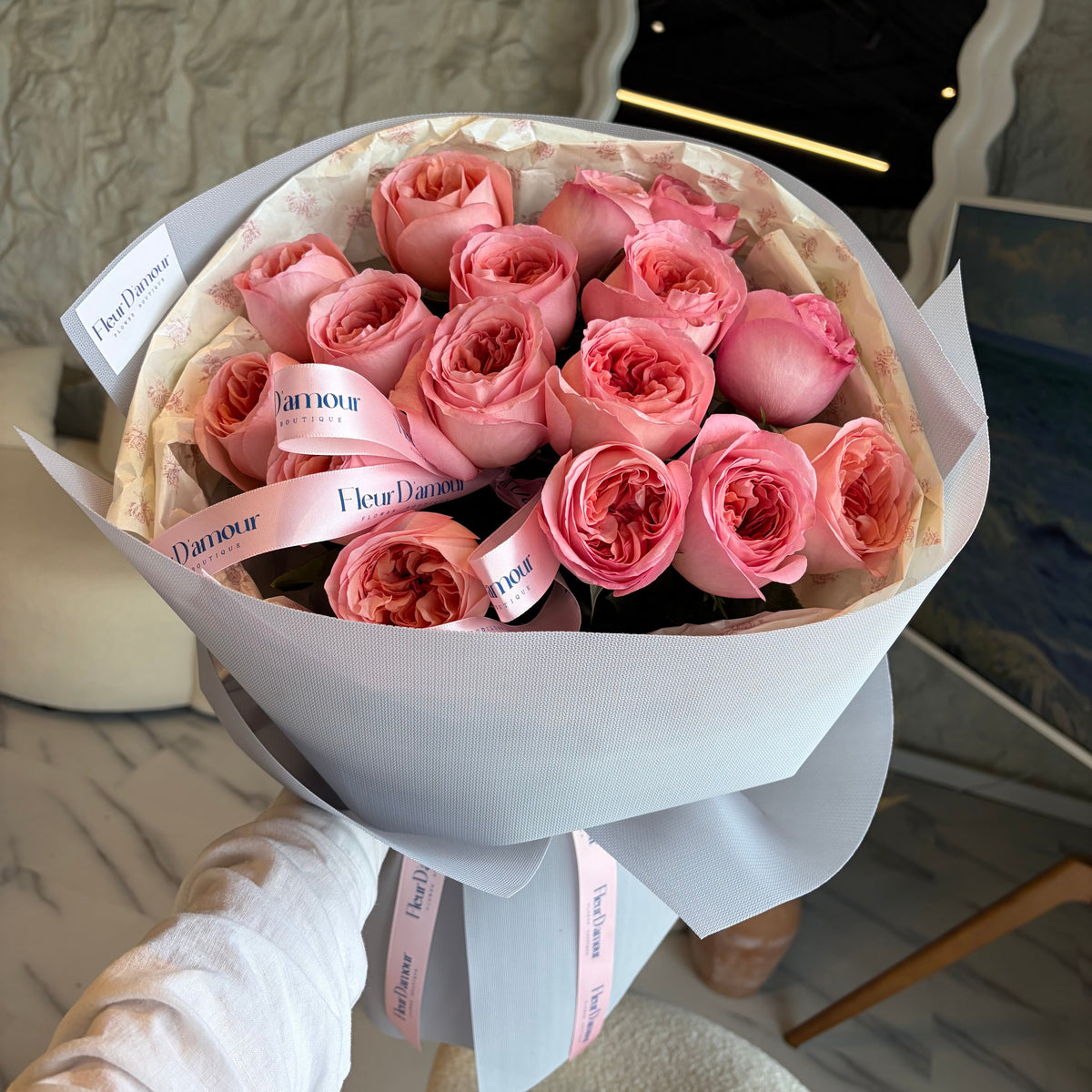
The best blooms for a winter bouquet are roses, tulips, peonies, hydrangeas, ranunculus, anemones and amaryllis, often paired with evergreen foliage. These flowers handle dry indoor heat well and look rich in low winter light. Greenhouse growers also supply them reliably from December through February.
What Is a Winter Bouquet?
A winter bouquet is a hand-tied or arranged set of flowers chosen for cold-season availability, durability and color. It usually combines sturdy blooms with textured greens, berries or branches.
Seasonal flowers are varieties harvested at their natural peak for a given time of year. Greenhouse-grown flowers are cultivated indoors under controlled conditions, which is why tulips and peonies can appear in winter. Vase life is the number of days cut flowers stay fresh after arranging.

Best Flowers for Winter Bouquets
Each of these blooms has its own strengths in cold months. Here is what to expect from every option.
Roses: The Winter Classic
A rose is a woody-stemmed flower prized for its layered petals and long vase life. In winter, deep red and burgundy roses feel especially fitting, and they last well when kept cool and hydrated.
If you want a clean, romantic statement, a Dozen of Red Roses is a dependable choice. For a bigger gesture, try Two Dozen of Red Roses. You can browse the full range in our Roses Bouquets collection.
Tulips: Fresh Color in Dark Months
A tulip is a cup-shaped bulb flower that continues to grow and bend after cutting. Greenhouse tulips arrive in winter in soft pinks, creams and bold reds, and they brighten any room.
Tulips are happiest in cool rooms with plenty of water. Explore our Tulip Bouquets for seasonal color.
Peonies: Lush and Romantic
A peony is a large, ruffled, fragrant flower once associated only with late spring. Greenhouse production now makes peonies available for much of the year, and their full shape suits winter celebrations.
For a soft, luxurious gift, consider 11 Pink Peonies. More options are in our Peonies Bouquets collection.
Hydrangeas: Volume and Longevity
A hydrangea is a clustered, mophead flower made of many small florets. It adds instant volume and tends to hold up well, provided its stems stay in clean water.
Blushing Clouds shows how soft, cloud-like blooms bring a calm, airy look to a winter room.
Ranunculus and Anemones: Delicate Texture
Ranunculus have paper-thin, layered petals, while anemones are known for their dark centers and silky petals. Both thrive in cool conditions and add a refined, boutique feel to mixed arrangements.
Amaryllis and Winter Foliage
Amaryllis is a tall, trumpet-shaped bulb flower that blooms naturally in winter. Evergreen foliage such as pine, cedar or eucalyptus adds fragrance and structure, and it lasts long in water.

Winter Flower Comparison Table
|
Flower |
Typical Vase Life |
Best Winter Colors |
Care Level |
Best For |
|
Roses |
7–12 days |
Red, burgundy, blush, white |
Low |
Romance, anniversaries |
|
Tulips |
5–7 days |
Pink, cream, red, purple |
Medium |
Home décor, small gifts |
|
Peonies |
5–8 days |
Pink, white, coral |
Medium |
Special occasions |
|
Hydrangeas |
7–10 days |
Blush, white, blue |
Medium |
Full, voluminous arrangements |
|
Ranunculus |
5–7 days |
Pastels, bright accents |
Medium |
Elegant mixed bouquets |
|
Amaryllis |
10–14 days |
Red, white, striped |
Low |
Holiday displays |
Vase life ranges are typical estimates. Actual results depend on freshness, room temperature and care.
Winter Color Palettes and Styling Ideas
Winter palettes lean rich, soft or crisp. Choose a direction that suits the recipient and the occasion.
- Classic red and green:red roses with pine or eucalyptus for holiday warmth.
- Blush and cream:soft pink peonies, white roses and light foliage for a romantic look.
- Snowy white:white tulips, ranunculus and hydrangeas for a clean, modern bouquet.
- Deep jewel tones:burgundy, plum and deep red for dramatic, candlelit settings.
For variety in one arrangement, our Mix Bouquets combine several bloom types in a single design. The Flower Of Love is a good example of a mixed approach, and the Cute Pink Bouquet suits a softer, friendlier gift.
How to Keep Winter Bouquets Fresh
Flower food is a packet of sugar, acidifier and antibacterial agents that feeds cut flowers and keeps vase water clean. Industry groups such as the Society of American Florists recommend clean vases, fresh trimming and flower food as the basics of cut-flower care.
Follow these steps for the longest-lasting display:
- Let the flowers adjust.If the bouquet was exposed to cold, leave it wrapped for 15–20 minutes, then unwrap.
- Trim the stems.Cut 1–2 cm off at an angle with clean scissors.
- Use a clean vase.Fill it with cool water and dissolve the flower food.
- Pick the right spot.Keep it away from radiators, vents, fireplaces and ripening fruit.
- Refresh regularly.Change the water every two days and re-trim every few days.
Florist’s tip: Winter indoor air is very dry. A cooler room, such as a hallway or a bedroom with the heat turned down, can add several days to a bouquet’s life.
Sending Winter Flowers Safely
Cold weather does not have to stop you from sending flowers. Insulated wrapping and careful delivery timing protect blooms from frost. Fleur D’amour Flowers offers pick-up at its boutique in Buffalo Grove, IL, or delivery arranged at checkout.
Once the bouquet arrives, bring it inside promptly and follow the care steps above. If you prefer a single-flower look, browse our Mono Bouquets.
How to Choose the Right Winter Bouquet
Start with the occasion, then match the flower to the mood. Romance points to roses, a cozy gift suits peonies or hydrangeas, and a bright pick-me-up suits tulips.
Consider the recipient’s space too. A compact bouquet fits a desk or nightstand, while a fuller arrangement suits a dining table or entryway.
Frequently Asked Questions
What are the best flowers for a winter bouquet?
Roses, tulips, peonies, hydrangeas, ranunculus, anemones and amaryllis are the best winter bouquet flowers. They stay fresh in dry indoor air and are widely grown in greenhouses.
Which winter flowers last the longest in a vase?
Roses, hydrangeas and amaryllis usually last the longest, often one to two weeks with proper care. Tulips and ranunculus are shorter-lived but still last around five to seven days.
Can you send flowers in freezing weather?
Yes. Florists use insulated wrapping and careful timing so bouquets reach the door without frost damage, but the flowers should be brought indoors promptly.
Are tulips a winter flower?
Tulips are traditionally spring flowers, but greenhouse growers supply them from late autumn through winter. They are one of the most popular cold-season bouquet choices.
What colors work best for winter bouquets?
Deep reds, burgundy, blush pink, white and cream are the most popular winter colors. Evergreen foliage adds contrast and a seasonal feel.
How often should I change the water in a winter bouquet?
Change the water every two days and re-trim the stems each time if you can. Fresh, clean water is the simplest way to extend vase life.
Share:
Holiday Centerpieces: Festive Florals for Your Table
One Dozen vs. Two Dozen Red Roses: Which Makes the Bigger Statement?